If your Google Business Profile has slipped in search results or Maps recently, you're not imagining it, and it's not something you did wrong. Google made some of the biggest changes to Business Profiles it's made in years, and most business owners have no idea any of it happened.
That pattern aligns with something we see often with new businesses. The Google Business Profile gets set up early, one of a dozen more urgent things happening at once alongside building signage, the website, and opening day campaigns. It gets filled in with the basics and then it sits there, doing its job quietly in the background, until one day it isn't doing its job quite as well.
Why?
Here's a quick view of what recently changed, and what's worth doing about it.
What’s changed with Google Business Profiles
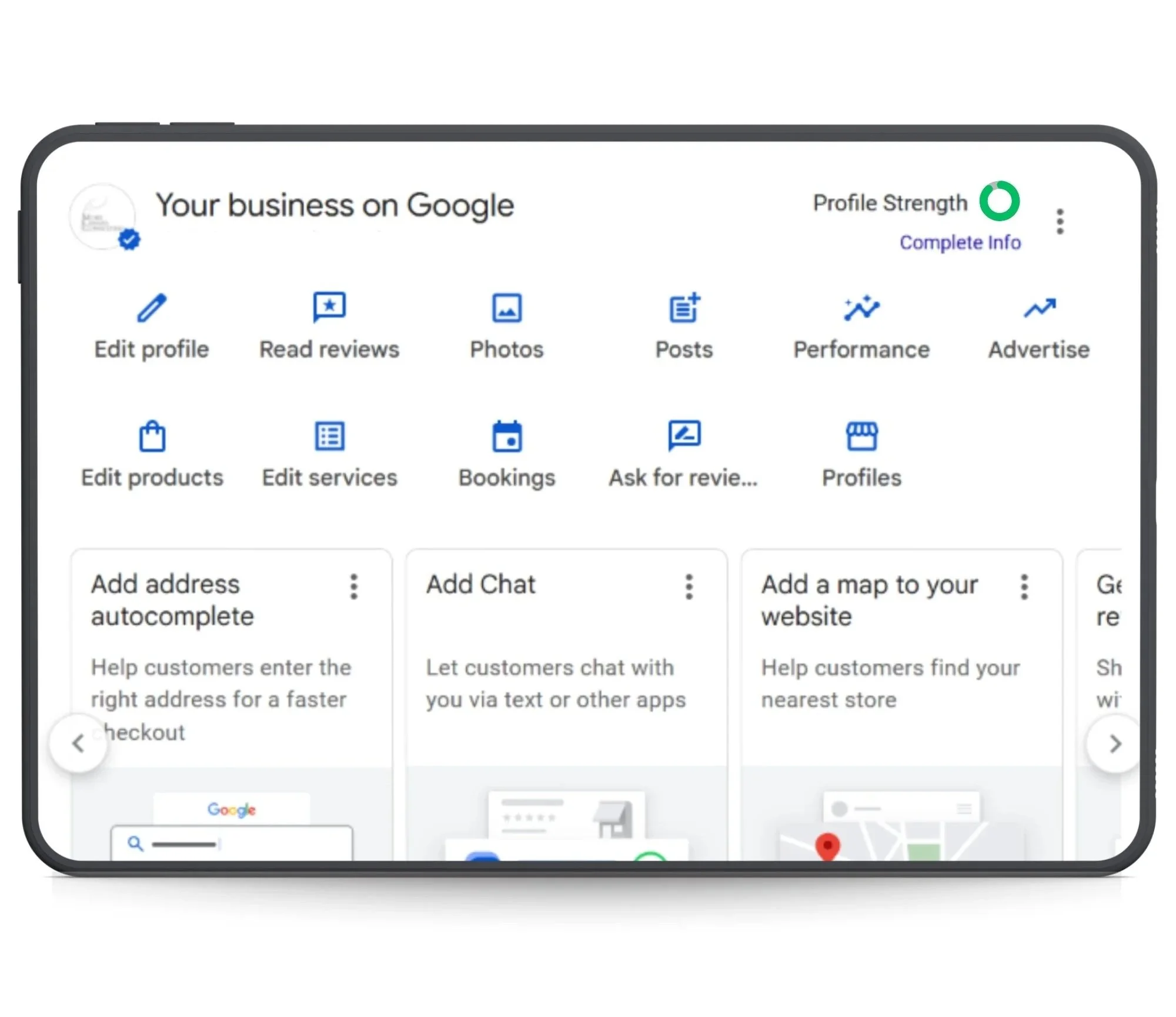
For years, Google leaned heavily on "prominence" — how long you've been listed, your total review count, your backlinks. That's now shifting toward "popularity," which is tied to how many people are actively clicking, calling, and engaging with your listing right now. A profile that was set up once and never touched again quietly loses ground under this model, even if nothing about the business itself has changed.
A few other updates rolled out alongside that shift:
The Q&A section is gone. In its place is an AI feature called Ask Maps, which pulls from your reviews, photos, and service descriptions to answer visitor questions in real time.
Review rules tightened this spring. Review kiosks and asking customers to name a specific staff member in their review are both against the rules now.
Profiles that go a month or more without a new photo or update tend to read as stale to Google, even when everything else on the listing is accurate.
The good news?
None of this means starting from scratch. It just means the profile isn't something you can set up once and forget the way it may have felt a few years back.
Why this sneaks up on so many owners
For many of the businesses and medical practices we've helped launch in the past decade, the Google Business Profile is one of many competing for attention. Between the lease, the buildout, the communications strategy, and opening day, there just isn’t room.
Sometimes the owner doesn’t realize what the profile actually does. Many think of it as a digital address book, somewhere customers find hours and directions, without realizing the photos, reviews, and service descriptions are shaping how someone feels about the business before they've even walked in the doors. And sometimes there's a small hurdle (multiple locations, ownership verification, or not knowing who still has admin access) that feels bigger than it is. Most of these take less time to sort out than the dread of starting might suggest.
If any of that sounds familiar, you're in good company. Most independent business owners have more urgent matters to focus on.
What's worth doing this week
If you have an existing Google Business Profile, you’re halfway there. You don't need an overhaul. A few small habits go a long way:
Double check your hours, especially around holidays. A profile marked "closed" when you're actually open can cost you visibility at the exact moment someone's deciding where to go.
Add a photo or a short update every few weeks. It doesn't need to be polished, recency is the point.
Respond to your reviews, both good and not so good. It's a real signal, and it shows people you’re paying attention (which will make others more likely to review in the future).
Fill in your service descriptions and categories completely. This is what Google's AI now pulls from to answer customer questions in Maps, so a sparse profile means sparse answers.
That's most of it. You don't need to become an SEO expert to keep the business profile working in your favor.
It's usually about ownership, not effort
The pattern we see again and again isn't that business owners don't understand the value. It's that nobody's specifically responsible for it. It falls somewhere between marketing and front desk staff and “whoever has a few free minutes,” and things that belong to everyone tend to belong to no one.
If that's where you're at, the fix isn't more advice, it's about defining ownership, whether that means folding it into someone's existing role or having an external team handle it directly.
Have questions about your Google Business Profile, or want a second set of eyes on it? Book a free 20-minute call or send us a message.